




-

Measure It, Don't Guess It: What Real Users Are Saying About Indoor Air
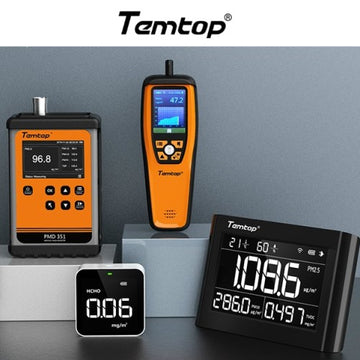
Through Temtop's #MyAirStory campaign, users shared real-life indoor air quality concerns from bedrooms, home offices, kitchens, children’s rooms, pet homes, and poorly ventilated apartments. Their stories point to one clear shift: people do not just want cleaner-feeling air. They want to understand what is happening in the air they breathe every day. We often think of air quality as an outdoor problem: traffic pollution,... -
Cleanroom (Ⅱ) — Operational Monitoring Guide: 1 CFM & Point Strategy
This article explains why online cleanroom monitoring favors 1 CFM (28.3 L/min) and how to plan representative sampling points using a practical Room → Process → Risk method. Larger minute-volume improves detection probability for small particles and shortens response time for transient spikes. We cover engineering essentials—isokinetic probes, optimized tubing, and routine calibration—to keep high-flow data stable. A “good-enough” alarm framework (baselines, SPC limits,... -
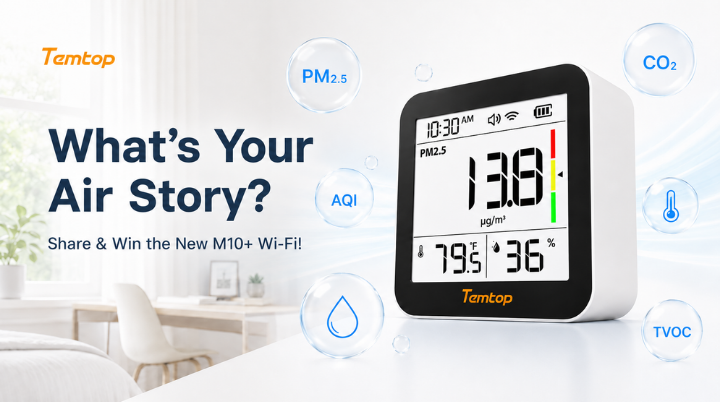
What's Your Air Story? Share & Win the New M10+ Wi-Fi!
Share your air quality story and win M10+ Wi-Fi Air Quality Monitor + $50 cash! Join #MyAirStory campaign. Easy to enter, deadline June 30, 2026. Get an exclusive 10% OFF code inside! -
2026 Allergy Report: Climate Change Intensifies Pollen Seasons—Why PM2.5 Monitoring Is Your Key Defense?
Allergies are becoming a year-round health issue in 2026, driven by climate change and rising pollen levels. Learn how worsening air quality and PM2.5 make monitoring more important than ever. -

Cleanroom Series (Part 1)
This article explains the cleanroom shift from spot checks to continuous, in-operation particle monitoring. It outlines why spot checks miss dynamic spikes and suffer from small sampling volumes and broken evidence chains. It then shows how continuous monitoring delivers earlier detection, better explainability, and audit-ready data. Readers learn the essential monitoring loop—Measure → Alert → Verify → Investigate → CAPA—plus practical ways to avoid... -
Winter Air Quality & Health: Why "Staying Indoors" Doesn't Always Mean Safer Air
Winter often traps outdoor pollution while reducing indoor ventilation. Understanding PM2.5, CO₂, TVOCs, and humidity trends helps manage exposure and comfort.