




-
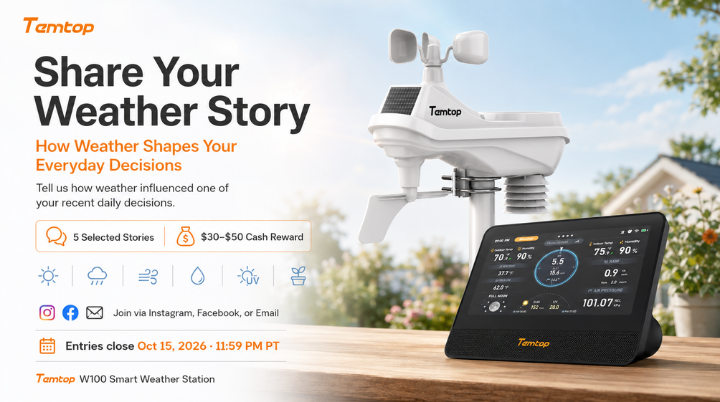
Share Your Weather Story: How Weather Shapes Your Everyday Decisions
Tell us how weather influenced one of your recent daily decisions. Five selected stories will receive a $30–$50 cash reward. -
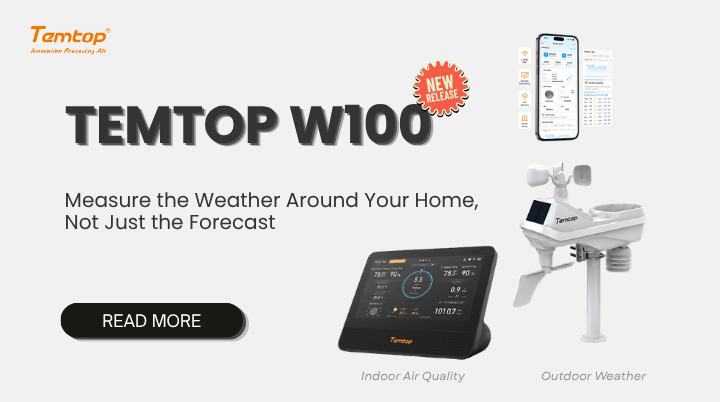
Temtop W100: Measure the Weather Around Your Home, Not Just the Forecast
Most of us check the weather before we start the day. We look at the forecast before a morning run. We check the temperature before gardening. We open a weather app before planning a weekend activity. But there is one problem: the forecast does not always describe what is happening right around your home. Your backyard may be windier than the local forecast suggests.... -
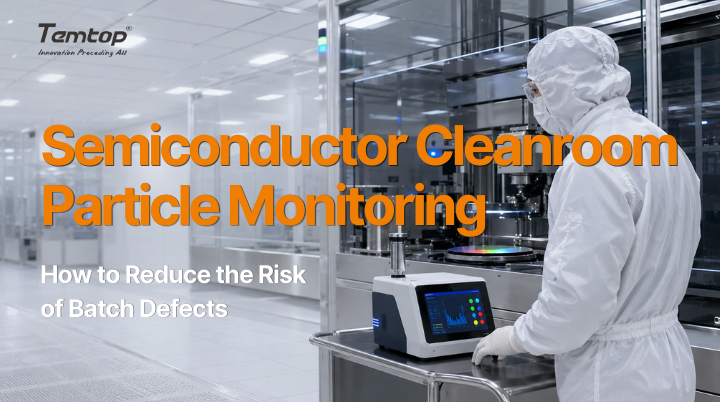
Semiconductor Cleanroom Particle Monitoring: How to Reduce the Risk of Batch Defects
In semiconductor manufacturing, airborne particles can create defects long before a problem becomes visible in downstream testing. This article explains why operational monitoring matters, how portable and online particle counters work together, and how ISO 14644-1 and ISO 21501-4:2018 support a more reliable cleanroom particle monitoring program. -

Temtop W100 Creator & Tester Program: Share Your Weather Story
Apply to join the Temtop W100 Creator & Tester Program. Selected creators, gardeners, weather enthusiasts, and smart home users may receive a W100 sample for real-life testing and content creation. -

Measure It, Don't Guess It: What Real Users Are Saying About Indoor Air
Through Temtop's #MyAirStory campaign, users shared real-life indoor air quality concerns from bedrooms, home offices, kitchens, children’s rooms, pet homes, and poorly ventilated apartments. Their stories point to one clear shift: people do not just want cleaner-feeling air. They want to understand what is happening in the air they breathe every day. We often think of air quality as an outdoor problem: traffic pollution,... -
Cleanroom (Ⅱ) — Operational Monitoring Guide: 1 CFM & Point Strategy
This article explains why online cleanroom monitoring favors 1 CFM (28.3 L/min) and how to plan representative sampling points using a practical Room → Process → Risk method. Larger minute-volume improves detection probability for small particles and shortens response time for transient spikes. We cover engineering essentials—isokinetic probes, optimized tubing, and routine calibration—to keep high-flow data stable. A “good-enough” alarm framework (baselines, SPC limits,...